
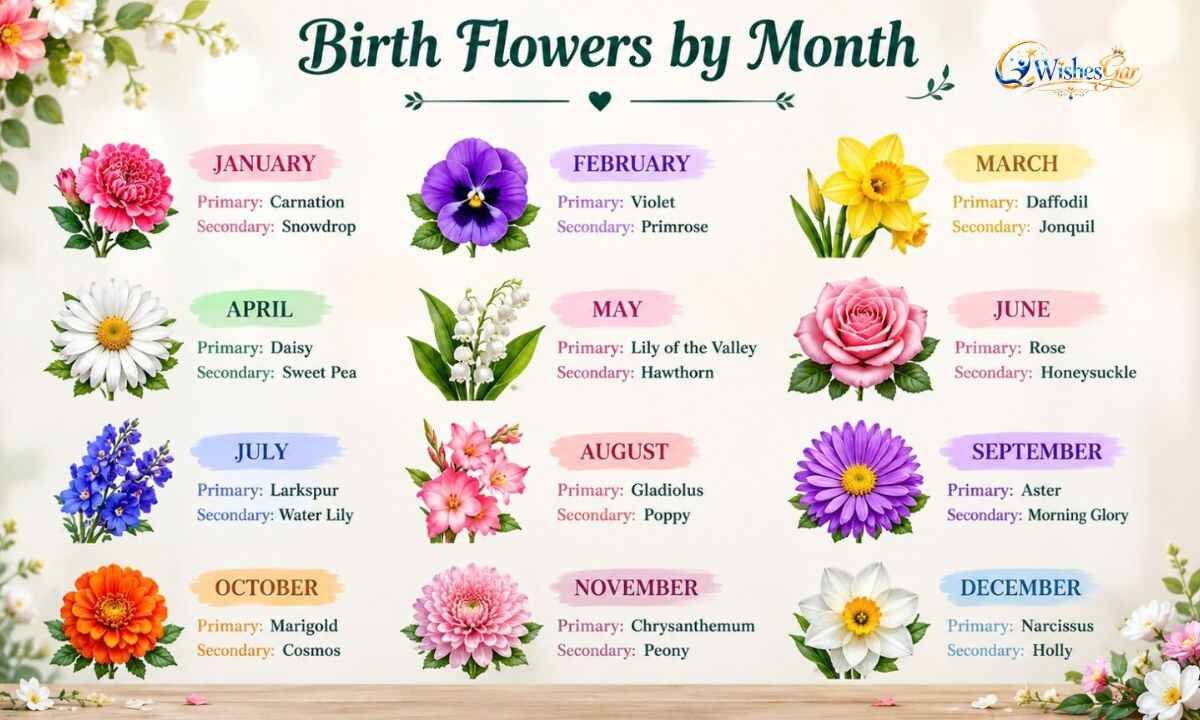
Every month of the year has its own special flower. These flowers are called birth month flowers. Long ago, people started giving flowers that match the month someone was born in. It became a sweet and simple way to celebrate a person’s birthday.
Each flower carries its own meaning. Some flowers stand for love and friendship. Others represent strength, joy, or new beginnings. When you learn about your birth month flower, you learn a little more about yourself too. It feels personal, almost like the flower was made just for you.
Birthday Month Flowers also make thoughtful gifts. Instead of picking any random flower, you can choose one that truly matches the person’s birth month. This small detail shows care and attention. It turns a simple gift into something meaningful and memorable.
In this article, we will explore each month and its special flower. You will learn their names, their meanings, and why they are connected to that month. Whether you are curious about your own flower or looking for gift ideas, this guide will help you understand the beautiful world of birthday flowers.
12 Birthday Month Flowers
Emotional & Symbolic Meanings of Birth Month Flowers
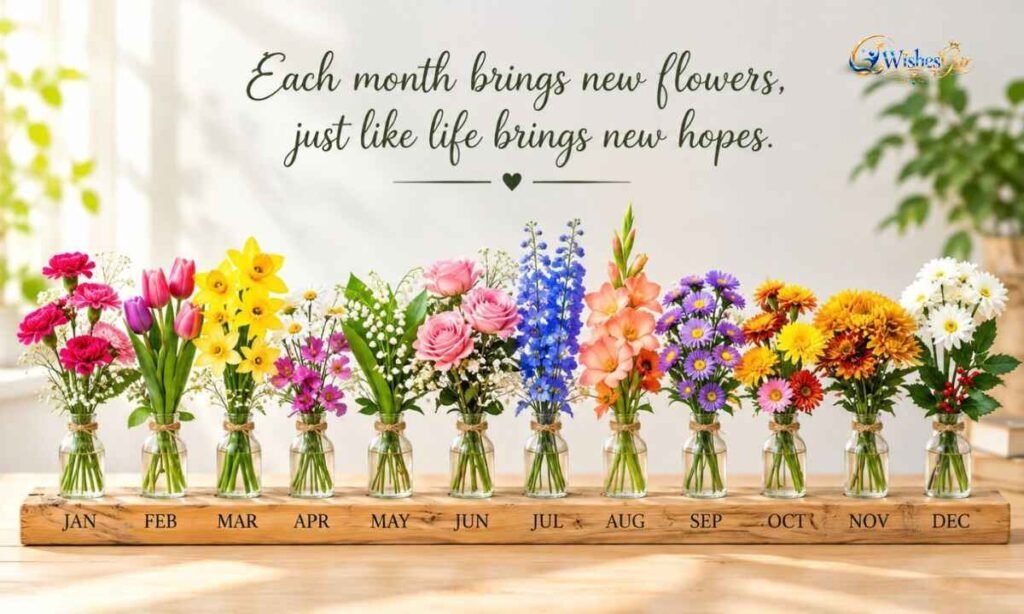
Flowers have always been a kind of silent language. A rose is never just a rose when it arrives wrapped in paper on your birthday; it is a feeling made visible. Birth month flowers work the same way. Over centuries each bloom has gathered meanings, from courage and hope to loyalty and tender affection, and those meanings give a gift extra weight.
It helps to remember that symbolism is a tradition, not a prediction. Nobody has to match the personality of a flower, and a January baby can be every bit as playful as a daffodil. Treat the descriptions below as warm suggestions, a starting point for a thoughtful present rather than a rule. Color matters too. The same flower can sound romantic in red, friendly in yellow, and peaceful in white, so choose the shade that suits the person you are celebrating.
January Birthday Flower
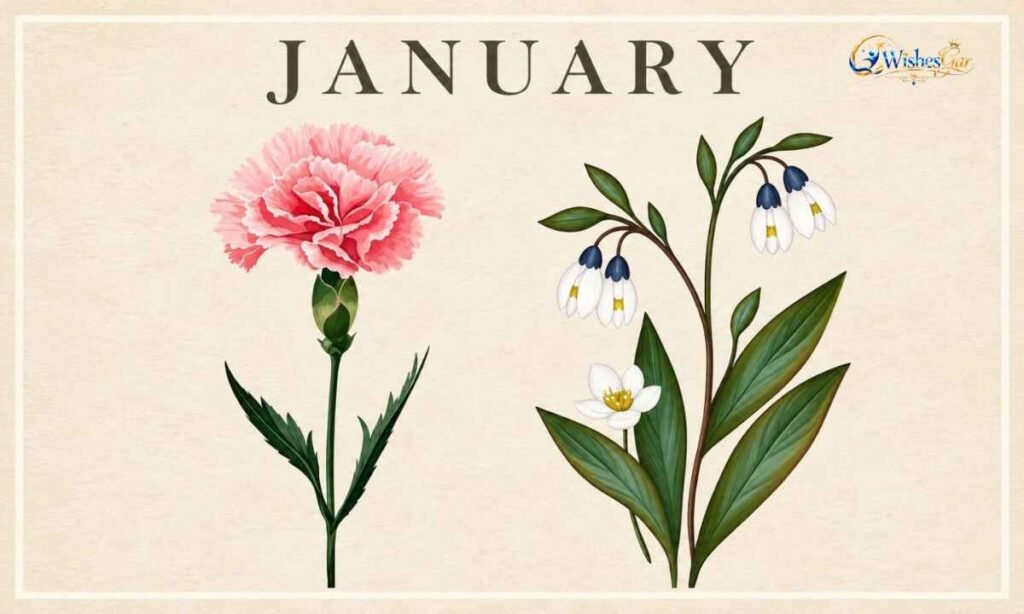
January’s main flower is the carnation, with the snowdrop as a lovely second choice. Carnations are tough, ruffled and long-lasting, which is why they are linked with devotion, admiration and quiet strength. They stay fresh in a vase for well over a week and come in almost every shade imaginable. Pink carnations speak of gratitude, white ones of pure affection, and red ones of deep admiration.
The snowdrop, a small white flower that pushes up through frost, stands for hope and fresh starts. Together the two suit a month that opens a brand new year. For a January birthday, a mixed bunch of carnations with a potted snowdrop on the side says: you are valued, and good things are on the way.
February Birthday Flower
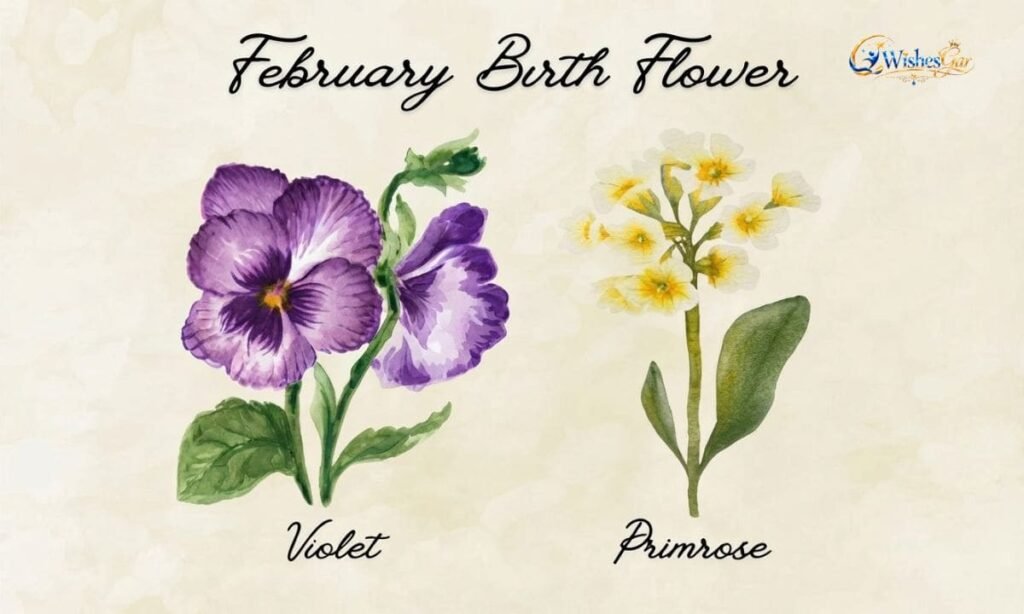
February belongs to the violet, with the primrose as an alternative. Violets are small and grow close to the ground, yet their deep purple has long been tied to loyalty, faithfulness and modesty. In the old language of flowers, offering violets meant you would stay true. Their soft, powdery fragrance also makes them a favorite for tiny hand-tied posies.
The primrose is one of the first flowers to show up as winter loosens its grip. It represents young love and the feeling of not wanting to be without someone dear. A February birthday gift can be as simple as a pot of primroses on a windowsill or a little violet bouquet tied with ribbon. Both quietly say thank you for staying by my side.
March Birthday Flower
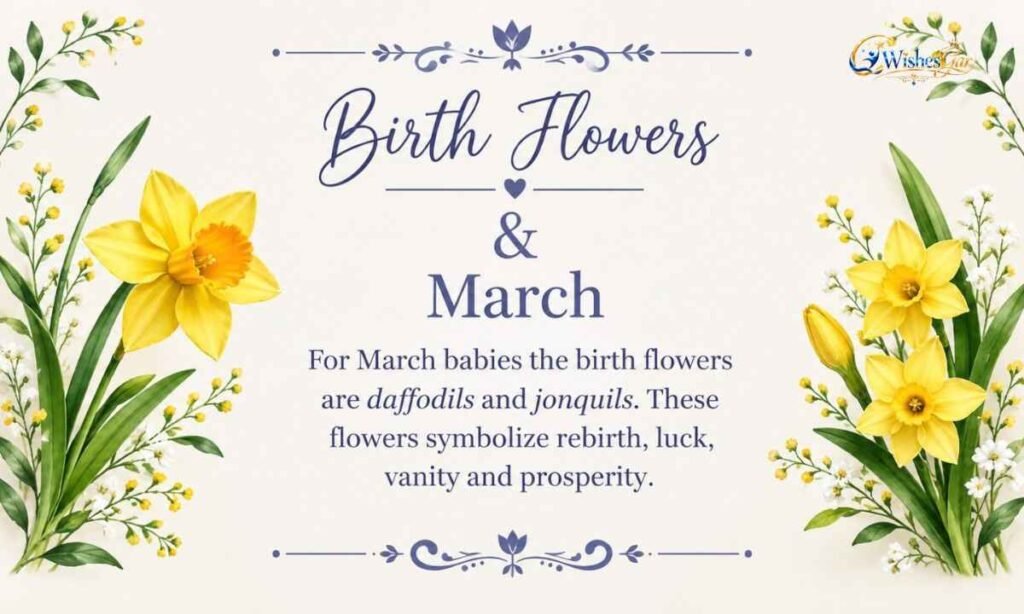
The daffodil owns March, and it deserves the spotlight. Its yellow trumpets appear just as winter lets go, so the flower has come to represent renewal, optimism and the joy of a second chance. The jonquil, a close relative with a stronger scent, is often listed beside it. Folklore in some places says a single daffodil brings bad luck, while a generous bunch brings happiness, so go for a cluster. Think of it as sunshine in a vase.
A March birthday is a natural moment to celebrate fresh starts. Pair the daffodils with a handwritten note that mentions something you are looking forward to doing together, and the flowers will feel personal instead of generic.
April Birthday Flower
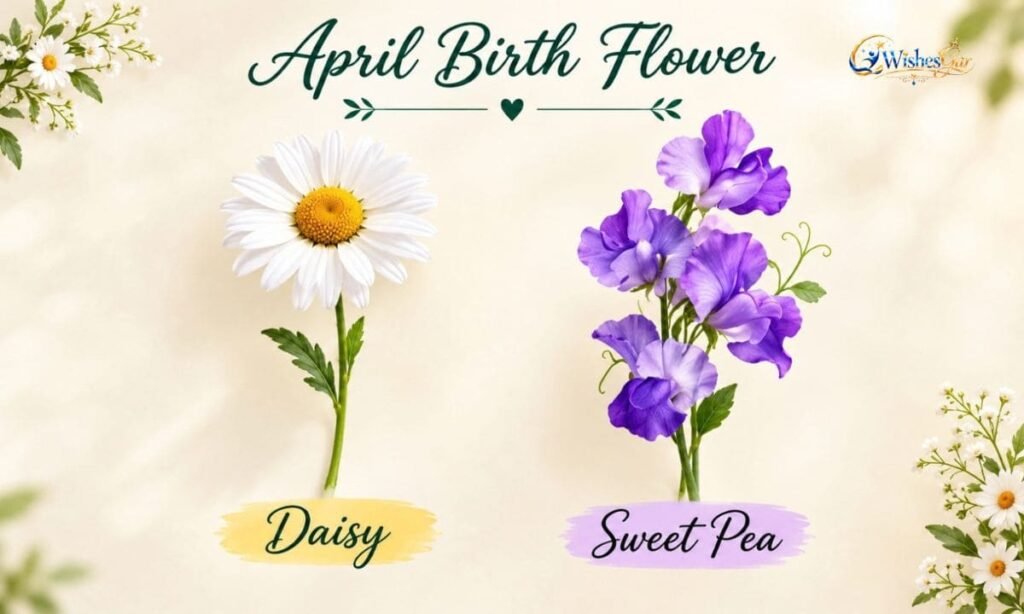
April offers two cheerful choices: the daisy and the sweet pea. The daisy is simplicity itself. White petals around a golden center stand for innocence, purity and loyal love, and children have picked them for generations to make chains and crowns. Even the name has a charming origin, coming from an old English phrase meaning day’s eye, because the flower opens with the sunrise.
The sweet pea has ruffled, scented blooms in soft pinks, lavender and white. In Victorian flower language it meant blissful pleasure, and it is still a popular way to say thank you. For an April birthday, a jar of daisies or a small sweet pea bouquet feels relaxed and sincere. The mood is simple: enjoy the small things and let them make you smile.
May Birthday Flower
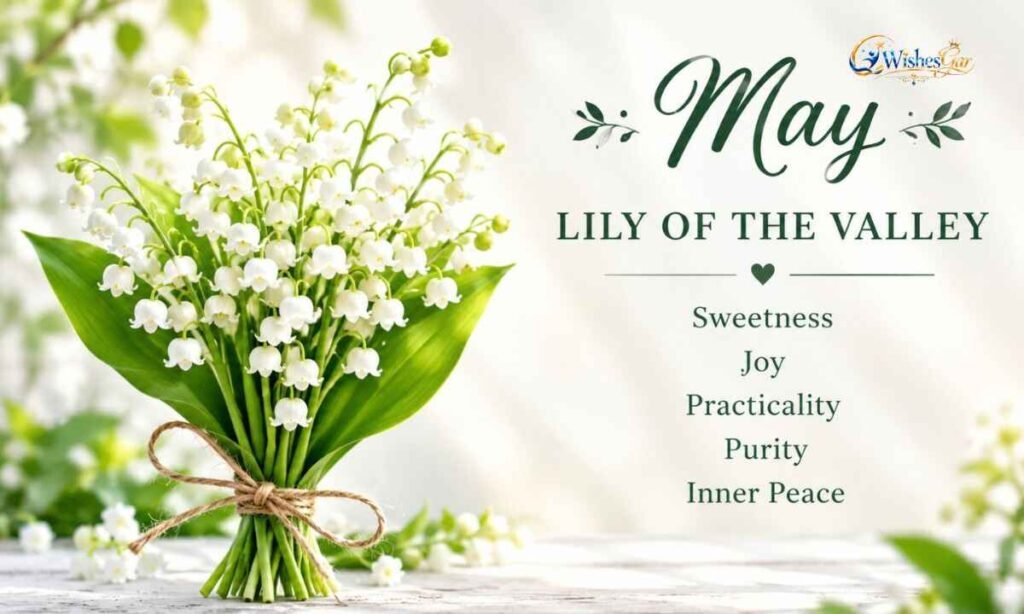
May is a month of two quiet beauties. Lily of the valley sends up tiny white bells along a curved stem, and its sweet scent is unmistakable. It has long symbolized happiness returning, humility and purity, and it is a classic flower for spring weddings. One caution: every part of the plant is poisonous, so keep it away from pets and small children.
Hawthorn, the other May flower, blooms across hedgerows in clouds of white and pink. It stands for hope and protection, and in many old traditions it marked the true arrival of spring. Choose lily of the valley for a refined gift, and enjoy hawthorn on a spring walk with the birthday person. Either way the message is the same: sweetness is worth waiting for.
June Birthday Flower
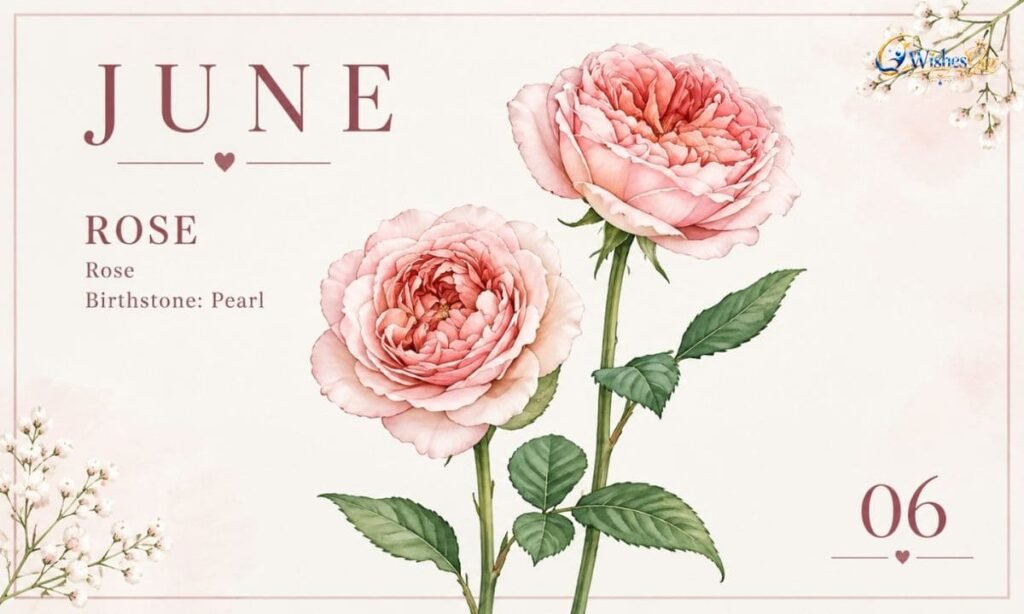
June pairs the rose with the honeysuckle, the most famous flower in the world beside a wild and fragrant climber. The rose is a whole vocabulary. Red speaks of romance, pink of admiration and gratitude, white of new beginnings and respect, yellow of friendship, and orange of enthusiasm. Whatever the shade, a rose tells the receiver that care went into the gift.
Honeysuckle spills over fences and fills summer evenings with sweetness. It symbolizes generous affection and the lasting bonds that tie people together. For a June birthday, give roses to a romantic partner, yellow roses to a close friend, and a few honeysuckle sprigs for a gentle, sentimental touch.
July Birthday Flower
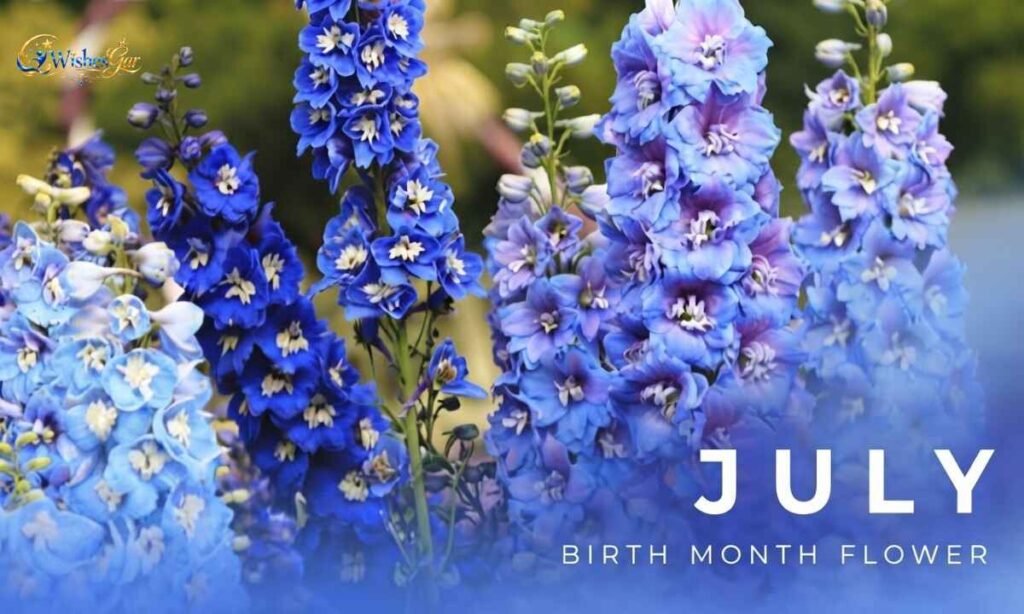
July is represented by the larkspur and the water lily. Larkspur grows into tall spikes of blue, purple, pink and white, and it stands for an open heart, a light spirit and strong ties to other people. Purple blooms are linked with first love, while white ones hint at a happy, easygoing nature. Be aware that larkspur is toxic if eaten, so it is best kept out of reach of curious pets.
The water lily floats calmly on quiet ponds and symbolizes peace, purity and beauty rising out of muddy water. The similar-looking lotus carries comparable ideas in many Asian traditions. For a July birthday, larkspur makes a dramatic, summery bouquet, while a framed print of water lilies makes a calm and thoughtful gift.
August Birthday Flower
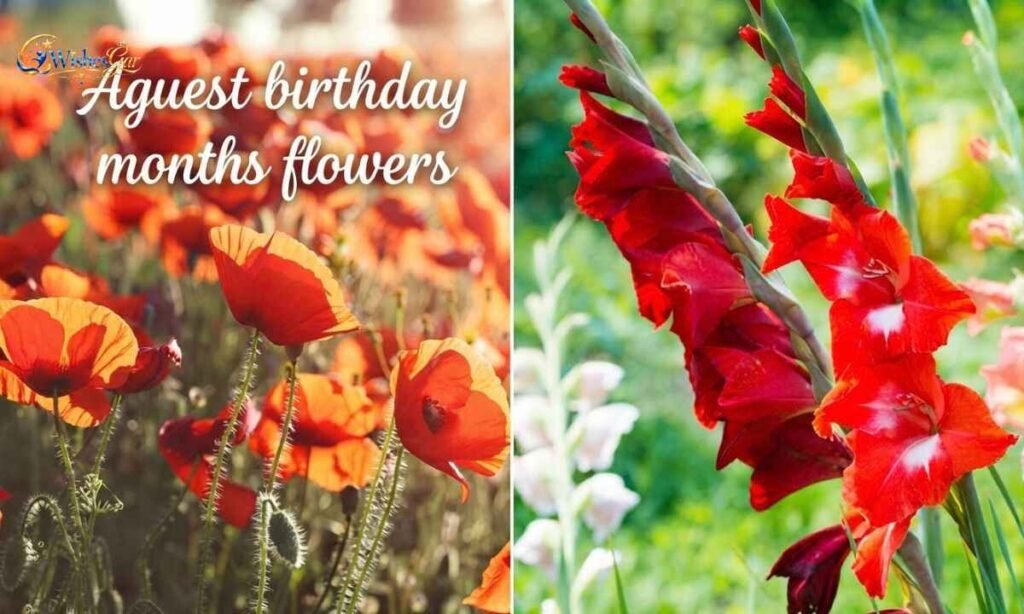
August boasts the gladiolus and the poppy. The gladiolus takes its name from the Latin word for little sword, a nod to its blade-shaped leaves. It stands for strength of character, integrity and being deeply moved by someone. Its tall stems carry rows of ruffled blossoms that open from the bottom upward, so a single stem keeps putting on a show for days.
The poppy is more delicate and more complicated. Red poppies are connected with remembrance in many countries, while other colors suggest sleep, imagination and quiet comfort. Gladiolus makes the bolder birthday gift for someone with a big personality. Poppies wilt quickly once cut, so they are better enjoyed growing in a garden or captured in a painting or card.
September Birthday Flower
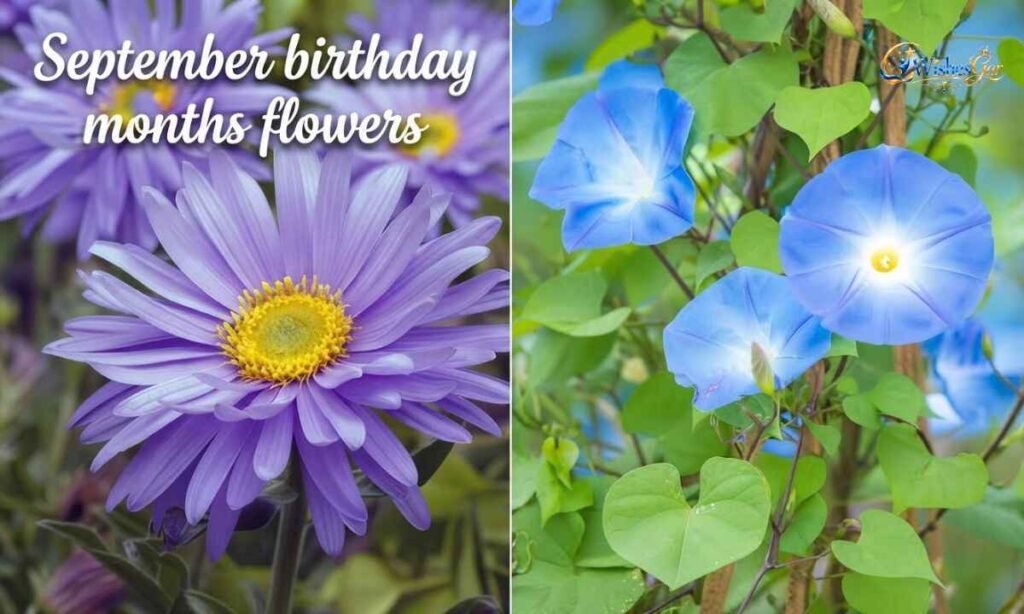
The aster belongs to September, and so does the morning glory. Aster comes from the Greek word for star, and the daisy-like blooms really do look like tiny starbursts in purple, pink, blue and white. They symbolize patience, elegance and faith, and they flower when many garden plants are fading, which feels like a lesson in finishing strong.
The morning glory opens at dawn and closes by afternoon, so it stands for affection that is fresh every day, along with new beginnings. For a September birthday, an aster bouquet feels calm and polished. If you would like something longer lasting, a packet of morning glory seeds is a sweet present with a promise built in.
October Birthday Flower
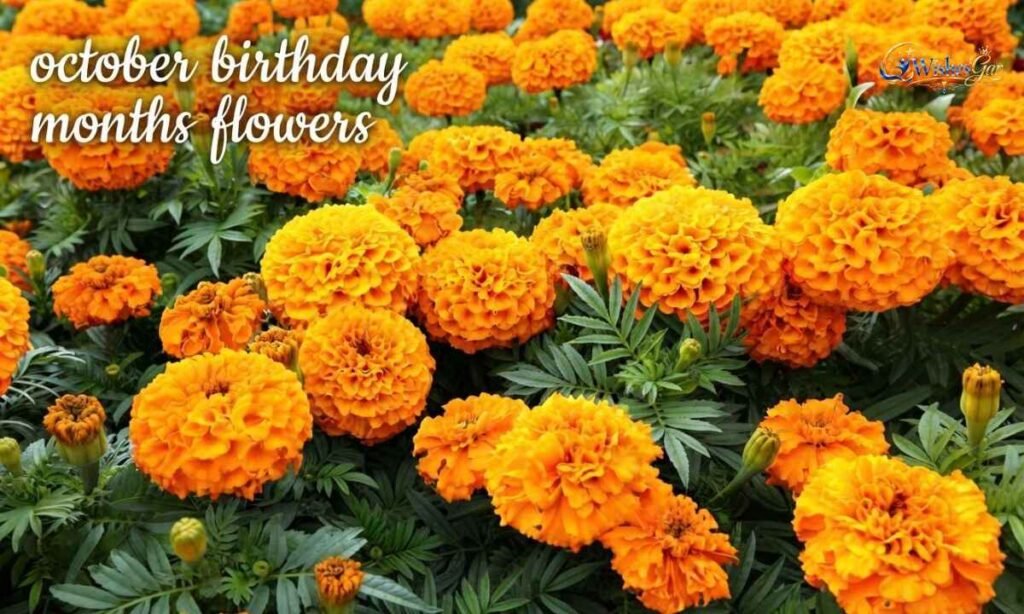
October’s flowers are the marigold and the cosmos, and both glow like autumn leaves. Rich orange and gold marigold petals symbolize warmth, creativity and passion. In Mexico the marigold is the flower of Día de Muertos, where its color and scent are used to guide loved ones home. It is a bloom that blends celebration with memory.
Cosmos comes from the Greek word for order and harmony, and its papery petals dance in the slightest breeze. It stands for peace, balance and the simple joy of being alive. A birthday arrangement of marigolds with a few cosmos stems brings the glow of the season indoors and matches the cozy feeling that autumn birthdays have.
November Birthday Flower
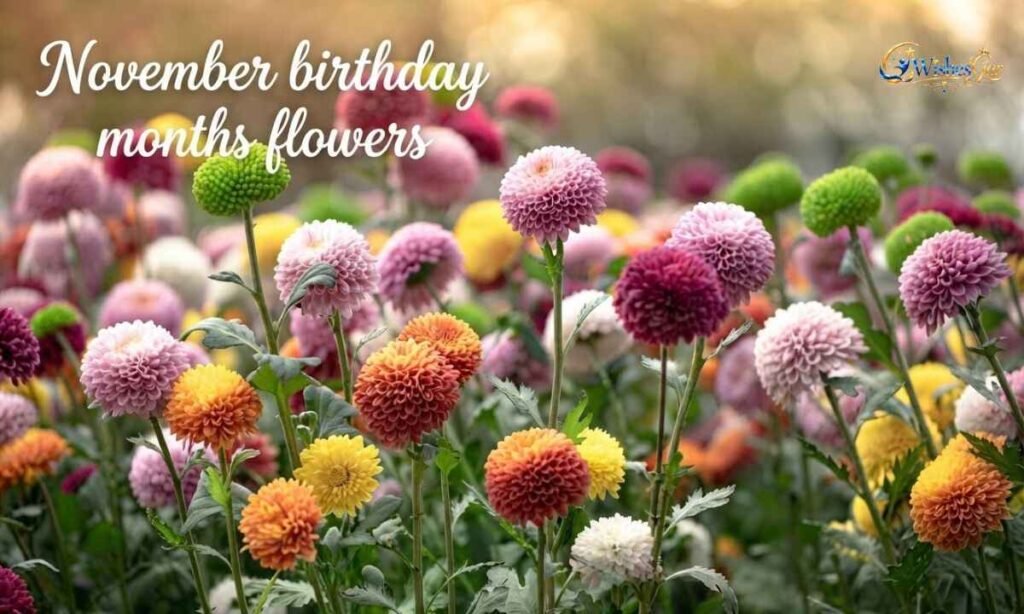
November has the chrysanthemum, often called the mum, and in some lists the peony as well. Chrysanthemums come in an enormous range of shapes and colors and are loved around the world. In Japan the flower is a national emblem, and in China it represents longevity and honor. In many places it signals friendship and cheerfulness, though in parts of Europe it is mainly used for remembrance, so check local customs before gifting.
The peony brings a softer, romantic note. Its full, ruffled blooms stand for prosperity, happy relationships and a touch of bashfulness. For a November birthday, a big mum bouquet suits a friend or relative, and peonies, when you can find them, suit someone you want to treat to something lavish.
December Birthday Flower
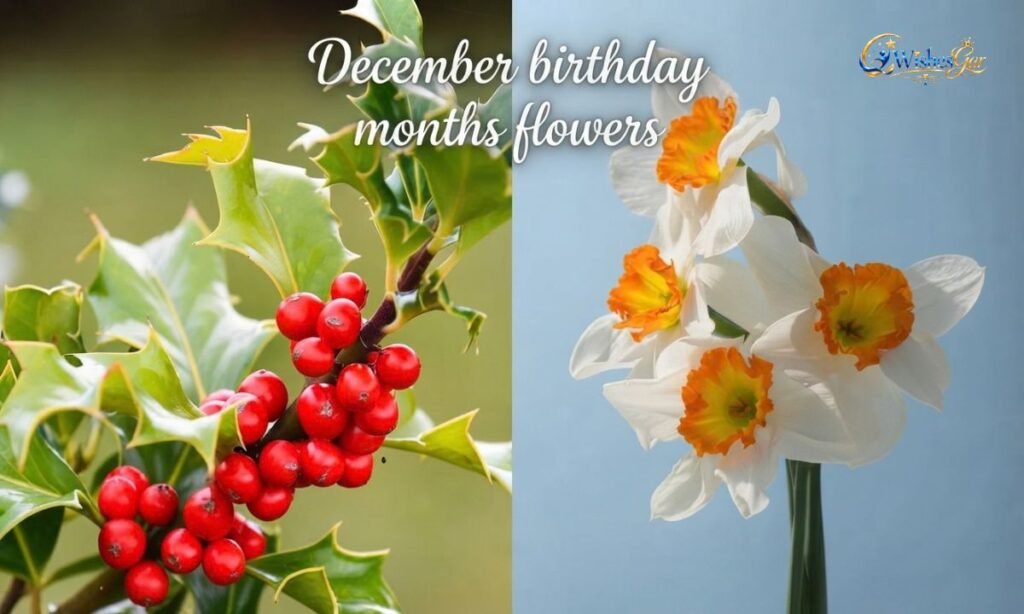
December’s plants are holly and narcissus. Holly is not a flower in the usual sense; it is the evergreen shrub with glossy leaves and red berries that has decorated winter homes for centuries. People hung it to protect the household and welcome good fortune, and today it symbolizes domestic happiness and cheer. Its berries are toxic if eaten, so keep it out of children’s reach.
Narcissus, especially the paperwhite, flowers indoors during the darkest months and fills a room with perfume. It stands for hope, good wishes and respect. A pot of paperwhite bulbs close to blooming is a wonderful December birthday gift, and a sprig of holly tucked into the card completes the winter mood.
History of Birthday Month Flowers
The habit of linking flowers with months and birthdays grew out of several older traditions rather than one single invention. In ancient Greece and Rome, fresh garlands and petals were part of festivals, feasts and personal celebrations, and plants were often connected with gods, seasons and good luck. Giving flowers to mark a happy day was already familiar long before anyone printed a birthday calendar.
The next big chapter arrived in the nineteenth century. In Victorian England and across Europe, the language of flowers, known as floriography, became a real craze. Books were published and sold that listed what each bloom meant, and people sent carefully chosen bouquets to say things that polite society did not allow them to say aloud. A tucked-in violet, a red rose or a sprig of ivy could carry a whole message.
Birth flowers as we know them today took shape in the twentieth century. As jewelers promoted an official list of birthstones, florists and gift makers followed with matching lists of flowers for each month. There is still no single universal chart, which is why you will often see different flowers for the same month in different countries and on different websites.
Today the tradition is more alive than ever. People choose their birth flower for jewelry, tattoos, greeting cards, wedding favors and personalized gifts, and social media has made it a popular theme for photos and party decor. The meaning has stayed remarkably steady: a bloom chosen with thought tells someone they matter.
Interesting Facts About Birthday Month Flowers
- No official list: Different countries and florists use different charts, and many months have two flowers.
- Color changes the message: A yellow rose says friendship, while a red one says romance.
- A language without words: In the 1800s a whole bouquet could be read like a sentence.
- Carnations and mothers: The carnation became a famous symbol of Mother’s Day, which is one reason it feels so affectionate.
- A national emblem: The daffodil is the national flower of Wales and is worn on St David’s Day each March.
- Starry names: Aster means star in Greek, and gladiolus means little sword in Latin.
- Safety first: Lily of the valley, larkspur and holly berries are toxic, so enjoy them with care around pets and children.
- Tea time: Chrysanthemum flowers are brewed into a popular tea in many parts of East Asia.
- Indoor winter color: Paperwhite narcissus bulbs can bloom indoors in a dish of water and pebbles within a few weeks.
- Cultural differences: A flower that means celebration in one country can be linked with remembrance in another.
Conclusion
Every month carries its own flower, and every flower carries its own little story. From the cheerful carnation of January to the warm chrysanthemum of November, these blooms remind us that nature has a special way of marking the time we were born. They aren’t just pretty petals — they’re quiet symbols of who we are and what we value.
Choosing a Birthday Month Flowers can make any gift feel more personal. Whether it’s a bouquet for a friend’s birthday or a small potted plant for yourself, picking a flower tied to your birth month adds a thoughtful, meaningful touch that store-bought cards simply can’t match.
Learning about these flowers also helps us connect with the seasons. Spring months bring soft, delicate blooms, while winter months often give us flowers that stand strong through the cold. This connection between birth, nature, and time makes the whole idea of birth month flowers even more charming.
In the end, birth month flowers are more than just a fun fact — they’re a simple, beautiful way to celebrate individuality. Whether you’re planning a gift, decorating for a birthday, or just curious about your own bloom, these flowers add color, meaning, and a touch of nature’s magic to every birthday.
FAQ’s
What are the 12 month birth flowers?
Carnation, violet, daffodil, daisy, lily of the valley, rose, larkspur, gladiolus, aster, marigold, chrysanthemum, and narcissus/poinsettia — one per month from January to December.
How do I find my birth flower?
Match the month you were born to its assigned flower on a standard birth-flower chart.
Which flower symbolizes a birthday?
There’s no single universal flower, but each birth month has its own symbolic flower tied to birthdays.
What is my zodiac flower?
Each zodiac sign has its own flower, such as rose for Taurus, daisy for Gemini, or sunflower for Leo.
What do you call 12 flowers?
A group of 12 flowers is commonly called a “dozen,” as in “a dozen roses.”
What are the top 3 luckiest zodiac signs?
Many astrologers rank Pisces, Cancer, and Sagittarius among the luckiest signs.
How many flowers mean “I love you”?
A single red rose or a bouquet of 12 red roses is traditionally used to say “I love you.”

Hi, I’m the author of WishesGar, sharing heartfelt wishes, quotes, and messages for every occasion. With 5+ years of content writing experience, I create meaningful content that helps people express their feelings.
My goal is to make every celebration more special with inspiring and memorable words.